
Why Customers Buy Certain Brands (Even When Better Alternatives Exist)


Every business likes to believe customers make rational decisions.
Build a better product. Offer better service. Charge a fair price. The market will naturally reward you. If only it worked that way.
Every day, businesses with objectively better products lose customers to competitors with stronger brands. Smaller companies outperform larger ones. Premium businesses charge twice as much for similar outcomes. New brands become category leaders while established businesses struggle to stay relevant.
The difference usually isn't the product.
It's how customers feel about the business before they ever become customers.
People don't buy what makes the most logical sense. They buy what feels like the safest, smartest, and most trustworthy decision.
Customers Don't Buy the Best Option
Imagine you're choosing between two companies you've never worked with. One has a decent website, a few testimonials, and little online presence.
The other regularly shares valuable insights, has recognisable founders, strong case studies, consistent branding, and appears everywhere you look.
Even if both companies are equally capable, which one feels like the safer choice?
Most people don't consciously compare every feature. They reduce uncertainty. Buying is rarely about finding the absolute best option. It's about feeling confident enough to stop searching.
The Wolken Observation
One pattern continues to appear across almost every industry we've worked in. Businesses spend enormous amounts of time improving what happens after someone becomes a customer, but very little time improving how customers feel before they ever reach out.
They refine operations.
Improve delivery.
Expand services.
Introduce new features.
All worthwhile investments.
But customers don't experience any of that until they've already chosen you.
The buying decision happens much earlier. It happens through perception.
The Real Competition Isn't What You Think
Most businesses believe they're competing against companies offering the same service. In reality, they're competing against uncertainty. Every potential customer is asking questions like:
Can I trust these people?
Will they actually deliver?
Do they understand businesses like mine?
Is this worth the investment?
Am I making the right decision?
The brand that answers those questions first usually wins. Not because it's objectively better. Because it feels safer.
The Wolken Choice Framework™
At Wolken, we believe customers usually choose brands based on six psychological drivers.
1. Familiarity
People naturally trust what they've seen before. A business that consistently appears through articles, social media, podcasts, newsletters, or referrals feels less risky than one they've never encountered.
Visibility creates familiarity. Familiarity reduces uncertainty.
2. Trust
Trust isn't built through slogans. It's built through repeated proof. Case studies. Customer stories. Founder insights. Educational content. Consistent delivery.
Every interaction either strengthens trust or weakens it.
3. Relevance
Customers don't want the best business. They want the business that understands their problem. The more specific your messaging becomes, the easier it is for customers to think:
"They're talking about me."
Relevance beats generality.
4. Clarity
Confused customers rarely buy. If people can't quickly understand what you do, who you help, and why you're different, they'll keep looking.
Clarity isn't simplicity for its own sake. It's removing unnecessary friction from decision-making.
5. Emotion
Even in B2B, people make emotional decisions before justifying them logically. Confidence. Relief. Excitement. Security. Belonging.
The strongest brands understand the emotional outcome they create, not just the functional one.
6. Reduced Risk
Every purchase carries uncertainty. Customers look for signals that reduce it. Testimonials. Recognisable clients. Thought leadership. Transparent pricing. Strong communication. Professional presentation.
The easier you make it to trust you, the easier it becomes to choose you.
Why Great Products Still Lose
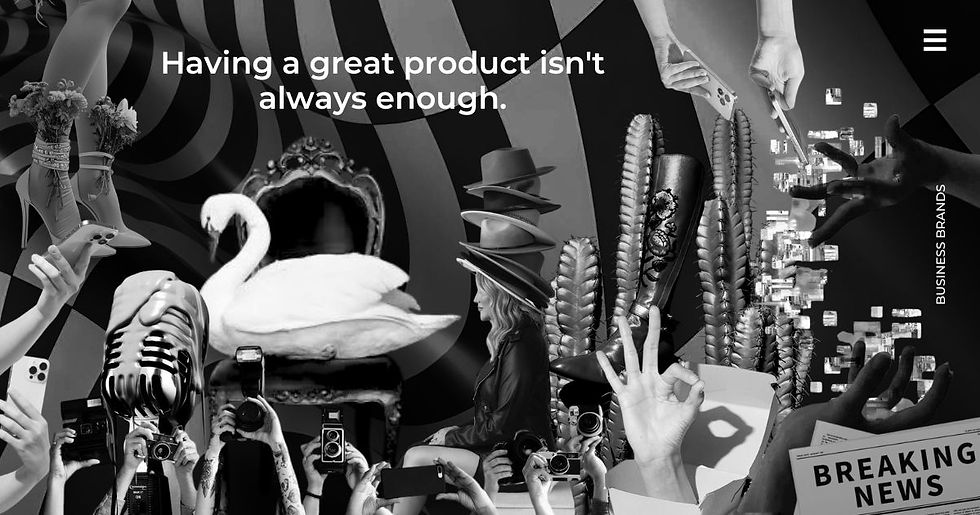
Many founders become frustrated because they know their product is excellent. They're often right. But products don't sell themselves. People don't experience your product until after they buy.
Until then, they're buying expectations. They're buying confidence. They're buying belief.
A brilliant product hidden behind weak positioning will almost always lose to a good product backed by a stronger brand.
What External Research Suggests
Research in behavioural economics and consumer psychology consistently shows that people use mental shortcuts when making purchasing decisions.
Rather than analysing every option equally, buyers look for signals that reduce effort and increase confidence. Familiarity, social proof, expertise, consistency, and perceived credibility all influence how people evaluate brands.
Customers don't simply ask, "Which option is best?" They ask, "Which option feels safest?"
The Biggest Mistakes Businesses Make
Some mistakes quietly reduce customer confidence long before a sales conversation begins.
Mistake 1: Assuming Quality Speaks for Itself
Exceptional work deserves visibility. Without it, customers never discover what makes you exceptional.
Mistake 2: Looking Like Everyone Else
Generic messaging creates generic perception. If every competitor sounds the same, customers often choose the one they've heard of most.
Mistake 3: Hiding the People Behind the Business
Customers trust businesses. They connect with people. Founder visibility, team stories, and genuine expertise make brands feel human.
Mistake 4: Inconsistent Communication
A strong website followed by inactive social media creates doubt. A polished proposal followed by slow replies creates doubt. Consistency builds confidence because it signals reliability.
Mistake 5: Selling Features Instead of Outcomes
Customers don't buy software. They buy efficiency. They don't buy branding. They buy recognition. They don't buy marketing. They buy growth. The outcome is always more compelling than the mechanism.
Why Brand Preference Is Built Before the Sales Call
By the time someone books a meeting with you, they're rarely starting from zero. They've probably visited your website. Read your content. Looked at your LinkedIn profile. Compared you with competitors. Read testimonials. Viewed your work.
In many cases, they've already decided whether you feel credible before the first conversation even begins. Sales often confirms decisions that branding quietly started.
The Wolken Brand Preference Loop™
Strong brands create preference through repetition.
Visibility creates familiarity.
Familiarity creates trust.
Trust creates confidence.
Confidence creates preference.
Preference creates advocacy.
Then advocacy creates even more visibility. That's how brands become difficult to compete with, even in crowded markets.
Actionable Takeaways
If you want more customers choosing your business, start here.
1. Increase Meaningful Visibility
Don't just appear more often.
Appear more helpfully.
2. Strengthen Trust Signals
Share customer stories, case studies, founder insights, and proof of expertise regularly.
3. Simplify Your Positioning
If customers need several minutes to understand what makes you different, your messaging needs work.
4. Focus on Emotional Outcomes
Think beyond features.
How should customers feel after choosing your business?
5. Reduce Uncertainty Everywhere
Every touchpoint should make customers feel more confident, not more confused.
Final Thoughts
Customers like to believe they buy logically.
In reality, logic usually validates decisions that emotion has already influenced. The businesses that consistently win aren't always the cheapest. They aren't always the oldest. They aren't always the most innovative. They're the ones that make choosing them feel easier. They reduce uncertainty. They build familiarity. They earn trust.
And they show up consistently enough that, when the buying moment arrives, they already feel like the obvious choice. That's the real power of a strong business brand.
Frequently Asked Questions
Why do customers choose one brand over another?
Customers usually choose the brand that feels most trustworthy, relevant, familiar, and capable of reducing risk—not necessarily the one with the objectively best product.
Is price the biggest factor in buying decisions?
Not always. Trust, confidence, perceived value, and familiarity often influence decisions more than price alone.
How does branding influence customer behaviour?
Branding shapes perception before a customer interacts with your business, making them more or less likely to trust and choose you.
Can a better product lose to a stronger brand?
Yes. If customers never experience the better product because they don't choose it, the stronger brand often wins first.
What is the Wolken Choice Framework™?
The Wolken Choice Framework™ explains six psychological drivers behind customer decisions: Familiarity, Trust, Relevance, Clarity, Emotion, and Reduced Risk.
Comments